
Most productivity advice stops when the workday ends. Yet the two or three hours around your evening meal quietly decide how well you sleep, how steady your energy feels in the morning, and how much mental clutter you carry into tomorrow. That is the idea behind dinner productivity: treating dinner as a deliberate part of your daily system instead of a gap between work and bed.
This guide explains what dinner productivity is, why it works, and how to build it in five practical steps. You will also get a sample evening schedule, easy dinner ideas, a 7-day starter plan, and a look at the digital tools that can make the routine almost automatic.
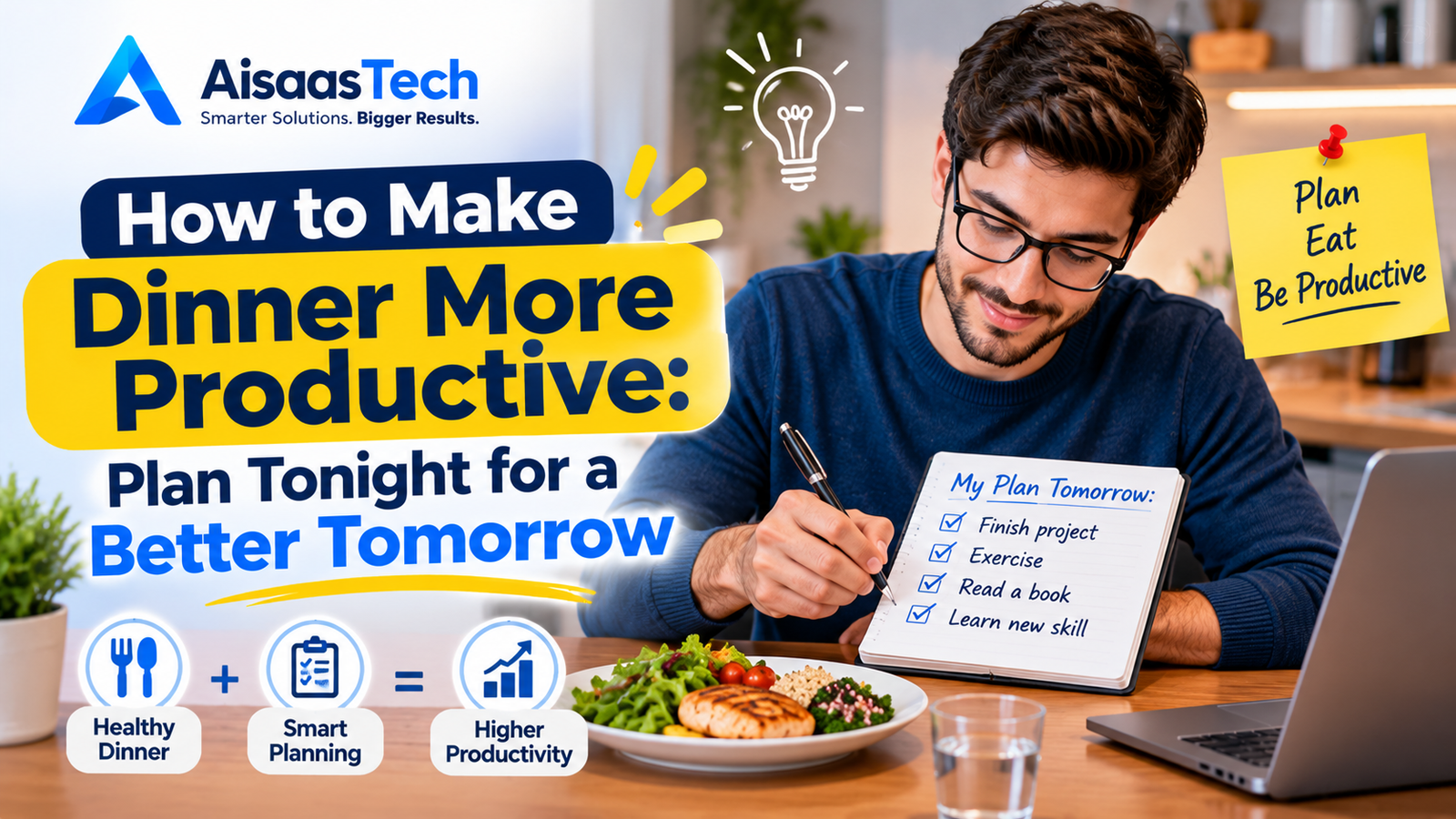
Quick answer: Dinner productivity means choosing what you eat, when you eat, and how you spend the evening after the meal so that you sleep better, wake up sharper, and start tomorrow with a clear plan.
What Is Dinner Productivity?
Dinner productivity is a simple framework built on three questions:
- What is on your plate? A meal that is satisfying but not so heavy that it disrupts sleep.
- When do you eat? Early enough to leave a comfortable gap before bed.
- What happens around the meal? A real break before it, and a short shutdown and planning routine after it.
Notice what it is not. It is not about working through dinner, and it is not a weight-loss diet. It is also different from workday nutrition, which focuses on breakfast, lunch and afternoon snacks to prevent a 3 p.m. slump. Dinner productivity focuses on the other end of the day: recovery and preparation.
Why the Dinner Hour Matters for Tomorrow’s Focus
Your performance tomorrow depends heavily on the quality of tonight’s sleep. Research on sleep loss is striking: in a well-known study by Williamson and Feyer, going without sleep for around 17 to 19 hours produced performance impairments on some tasks comparable to a blood alcohol concentration of about 0.05%. You do not need to be fully sleep-deprived for the effect to show up. Even a few restless nights can leave you slower, more distracted, and more irritable.
The evening meal touches sleep in three ways:
- Food choices can make you feel comfortably satisfied or uncomfortably heavy at bedtime.
- Timing affects how much digestion is still going on when you try to fall asleep.
- Mental state matters too. If you eat while answering emails, your brain never gets the signal that the workday is over.
The science on individual foods and exact meal timing is still developing, and people respond differently. Treat the guidance below as a sensible starting point and adjust it based on how you actually feel. For general sleep guidance, the CDC’s sleep resources are a reliable place to start.
The 5 Pillars of Dinner Productivity
1. Build a Focus-Friendly Dinner Plate
You do not need an exotic menu. A good productivity dinner is balanced, familiar and not excessively large.
- A protein you digest comfortably: fish, chicken, eggs, lentils, chickpeas, tofu or paneer.
- Plenty of vegetables or salad: they add fiber and volume without heaviness.
- A moderate portion of slower-digesting carbs: brown rice, whole wheat roti, quinoa, oats or sweet potato.
- A little healthy fat: olive oil, nuts, seeds or avocado.
Some foods are often suggested for evening meals because they contain nutrients linked to relaxation and sleep, such as magnesium in leafy greens and pumpkin seeds, or tryptophan in eggs, fish and legumes. Evidence that a single food will change your sleep is modest, so think of these as helpful choices rather than magic ingredients.
What tends to cause trouble is the opposite end: very large portions, very greasy or spicy dishes, heavy sweets, and alcohol or late caffeine close to bedtime.
2. Get the Timing Right
A common recommendation is to finish dinner roughly two to three hours before bed. That gives your body time to digest before you lie down, and many people notice they fall asleep more easily.
If your schedule makes that impossible, do not give up on the whole routine. Shrink the meal instead. A lighter dinner at 10 p.m. is usually easier on sleep than a heavy one at the same hour. We cover late eaters in more detail below.
3. Make Dinner a Real Break
Eating at your desk, scrolling through work chats or watching stressful news keeps your mind in work mode. Your body is fed, but your brain has not rested.
Try a few small rules:
- Move the meal away from your laptop, even if that only means a different chair.
- Put your phone face down or in another room for the first 15 minutes.
- Talk to someone, or listen to music or a podcast that has nothing to do with work.
This matters for productivity because rest and recovery are part of how you sustain good work. People who recover well in the evening usually return to their tasks with more patience and clearer thinking.
4. Run a Short Shutdown and Planning Routine
This is the step that turns a healthy dinner into true dinner productivity. A shutdown routine is a short, repeatable sequence that closes your workday so unfinished tasks stop circling in your head.
A simple version takes about ten minutes:
- Capture: write down every open loop, from unanswered emails to half-finished ideas.
- Note where you stopped: one or two sentences on your most important task.
- Choose three priorities for tomorrow. Three is enough. Ten tasks only create an illusion of progress.
- Place them on your calendar, ideally in the part of the day when you usually think best.
- Say “done for today” and close the apps.
Doing this after dinner rather than at 11 p.m. gives your mind time to settle before sleep. If you want to automate parts of it, such as recurring reminders, calendar blocks and task syncing, our complete guide to automation shows how to set up simple workflows that run without constant effort.
5. Protect the Last Hour Before Sleep
A strong dinner routine can be undone by a chaotic final hour. Bright lights, endless scrolling and stimulating content all make it harder to wind down.
- Dim the lights and switch to warmer lamps.
- Charge your phone outside the bedroom if you can.
- Choose low-stimulation activities such as reading, light stretching or calm conversation.
- Keep a consistent bedtime. Regularity helps more than occasional perfect nights.
Dinner Productivity vs. Lunch Nutrition: What’s the Difference?
People often mix up these two ideas, so here is a clear comparison.
| Factor | Workday nutrition (breakfast and lunch) | Dinner productivity |
| Main goal | Steady focus during working hours | Better sleep and a stronger start tomorrow |
| Key levers | Meal timing, protein, snacks, hydration | Meal size, timing, recovery and planning |
| Biggest risk | Afternoon energy slump | Late, heavy, distracted evenings |
| Best used for | Today’s output | Tomorrow’s output |
They work best together. If you are not sure where to begin, start with the area where you feel the biggest problem: foggy mornings point to your evening routine, while afternoon crashes point to your daytime meals.
A Sample Dinner Productivity Evening
Times will vary with your schedule, so use this as a template and shift everything earlier or later as needed.
| Time | What you do | Purpose |
| 6:00 p.m. | Finish work, close laptop | Clear boundary between work and rest |
| 6:15 p.m. | Quick walk or stretch | Mental reset before eating |
| 6:45 p.m. | Eat a balanced dinner, phone away | Real break and comfortable digestion |
| 7:30 p.m. | Light 15- to 20-minute walk or chores | Gentle movement after the meal |
| 8:30 p.m. | 10-minute shutdown and planning | Tomorrow’s top three priorities set |
| 9:30 p.m. | Dim lights, screens off, relax | Prepare body for sleep |
| 10:30 p.m. | Bedtime | Enough rest for a sharp morning |
Easy Dinner Ideas That Support Tomorrow’s Focus
These options are simple, widely available, and easy to scale for a family.
| Dinner idea | Why it fits | Prep time |
| Grilled fish or chicken with salad and a small portion of rice | Lean protein, fiber, moderate carbs | 25 to 30 min |
| Lentil or chickpea curry with one whole wheat roti | Plant protein and fiber, filling without being heavy | 30 to 35 min |
| Vegetable omelette with whole grain toast | Quick, protein-rich, light | 10 to 15 min |
| Chicken and vegetable stir-fry | Balanced plate in one pan | 20 min |
| Yogurt, nuts and fruit bowl (for very late nights) | Light option when you eat close to bedtime | 5 min |
Cooking in batches on a weekend and storing portions makes weeknight dinners much faster, which removes the most common excuse for skipping the routine.
Dinner Productivity for Late Eaters and Busy Schedules
In many households, dinner happens at 9 or 10 p.m. because of long commutes, family schedules, shift work or cultural habits. The routine can still help you if you adapt it:
- Eat lighter when you eat later. Make the plate mostly vegetables and protein, with a smaller portion of the heaviest dishes.
- Move your biggest meal earlier. If lunch is your main meal, a smaller dinner is easier to manage.
- Use a snack bridge. A small, protein-based snack in the late afternoon can stop you from arriving at dinner starving and overeating.
- Do the shutdown routine before the meal if it will be very late, so you are not planning tomorrow at midnight.
- Allow a longer wind-down if you cannot extend the gap between dinner and bed.
If you work nights or rotating shifts, anchor the routine to your own “evening” rather than the clock.
Tools That Make Dinner Productivity Easier
You do not need special software, but a few digital helpers remove friction:
- Calendar reminders: schedule a recurring “start shutdown” alert and a “phone away” reminder.
- Task managers and planners: use them to capture open loops and map tomorrow’s top three tasks.
- Habit trackers: log two simple things daily, such as “dinner finished on time” and “shutdown done.”
- Meal planning and grocery apps: reduce the daily “what should we cook?” decision.
- AI assistants: ask for a week of simple dinner ideas based on what is already in your kitchen. For more on getting natural, usable results from AI, read our guide on how to fix AI-generated content that sounds robotic, and browse our software and AI categories for more tool ideas.
Choose one or two tools at most. A paper checklist works just as well if you prefer it.
Caffeine, Alcohol and Water: What to Drink Around Dinner
What you drink in the evening can support a well-planned dinner or undo it. Three drinks deserve attention: caffeine, alcohol and water.
Caffeine
Caffeine stays active longer than most people expect. In a small study of 12 healthy sleepers, Drake and colleagues gave 400 mg of caffeine, roughly two to three cups of coffee, at different times before bed. Even when it was taken six hours before bedtime, total sleep time fell by more than an hour, and the participants did not notice the disruption themselves.
A practical rule: for a 10:30 p.m. bedtime, finish your last coffee, strong tea, cola or energy drink by about 4:30 p.m. Remember that chai and some pain relievers also contain caffeine. Sensitivity differs from person to person, so move your cutoff earlier if you still sleep lightly.
Alcohol
Alcohol can help you fall asleep faster, which is why some people treat it as a sleep aid. A review of studies on healthy volunteers found that it also tends to disrupt the second half of the night and to reduce REM sleep. If tomorrow’s focus matters, skip it on important days, or keep the amount small and finish well before bed.
Water
Staying hydrated through the day supports concentration, so spread your water across the day instead of catching up at night. In the evening, sip with dinner and stop large drinks about an hour before bed so you are not woken by trips to the bathroom.
Dinner Productivity for Different Lifestyles
The same principles apply to everyone, but the practical details change with your day.
- Students: Cook simple meals in batches, keep dinner away from your study desk, and finish your last revision block before eating, not during it. A 10-minute shutdown that lists tomorrow’s top three study tasks works well before exams.
- Remote workers: Your kitchen and your office may be the same room, so create a clear end-of-work signal: close the laptop, change rooms and start dinner preparation right away. Eat at the table, not at the workstation.
- Parents and busy households: Aim for one shared, screen-free meal. Do your shutdown routine after the children are in bed, and keep a few fast, balanced dinners in rotation, such as omelettes, dal with roti or stir-fries.
- Shift workers: Treat the meal before your main sleep period as your dinner. Keep it light, avoid caffeine in the second half of your shift, and follow the same pattern on days off as far as you can.
A Week of Dinner Ideas and a Simple Grocery List
If deciding what to cook is your biggest obstacle, use this plan as a starting point and swap dishes to suit your taste and budget.
| Day | Dinner | Prep note |
| Monday | Grilled chicken, salad and a small portion of rice | Marinate in the morning |
| Tuesday | Lentil dal, one whole wheat roti and sautéed greens | Cook the dal in a large batch |
| Wednesday | Vegetable omelette with whole grain toast | About 15 minutes from start to finish |
| Thursday | Pan-seared fish with roasted vegetables | Frozen fish works if fresh is hard to find |
| Friday | Chickpea curry with cucumber salad | Reuse chickpeas cooked earlier in the week |
| Saturday | Chicken and vegetable stir-fry | Chop the vegetables ahead of time |
| Sunday | Vegetable soup with eggs or paneer | A light meal before the new week |
A basic grocery list covers most of these meals:
- Proteins: chicken, fish, eggs, lentils, chickpeas, paneer, yogurt
- Vegetables: leafy greens, cucumbers, tomatoes, onions, carrots, bell peppers
- Staples: rice, whole wheat flour for roti, whole grain bread, cooking oil, spices
Cooking lentils and chickpeas once and using them for two or three dinners cuts weeknight cooking time.
How to Track Whether It Is Working
A routine you never measure is hard to improve. Keep the tracking light: a notes app or a paper checklist is enough.
| What to record | How | When |
| Morning energy | Rate it from 1 to 5 within ten minutes of waking | Daily |
| Dinner finish time | Write down the clock time | Daily |
| Shutdown done | Yes or no | Daily |
| Time to fall asleep | A rough guess in minutes | Daily |
| Weekly review | Compare energy scores on days you ate early with days you ate late | Every Sunday |
After two weeks, look for patterns rather than perfect scores. If your energy is higher on days when you finished dinner earlier or kept caffeine out of the evening, keep those habits and drop the ones that made no difference. If your sleep stays poor or you remain tired, speak with a doctor.
Common Dinner Productivity Mistakes
- Treating it as a diet. The goal is better recovery, not restriction.
- Starting everything at once. New routines stick better when you add them gradually.
- Eating dinner while working. You lose the break that makes the routine valuable.
- Planning too many tasks for tomorrow. Overloaded lists create stress, not momentum.
- Ignoring individual differences. Health conditions, medications and personal digestion all matter. If you have diabetes, a digestive condition or other medical concerns, check with your doctor or a registered dietitian before changing how you eat.
Your 7-Day Dinner Productivity Starter Plan
Habits take time to settle. In a widely cited University College London study, volunteers needed anywhere from 18 to 254 days before a daily behavior became automatic, with a median of 66 days. So aim for steady, small wins rather than perfection.
Research on “if-then” planning is encouraging as well. A meta-analysis by Gollwitzer and Sheeran found that deciding in advance when and where you will act helps people reach their goals. You can use it here: “When my last meeting ends, I write tomorrow’s top three tasks. Once that is done, I start cooking.”
| Day | Focus |
| Day 1 | Choose your target dinner time and set a reminder |
| Day 2 | Eat dinner away from your desk, phone out of reach |
| Day 3 | Add a balanced plate: protein, vegetables, moderate carbs |
| Day 4 | Take a 15-minute walk after dinner |
| Day 5 | Try the 10-minute shutdown and pick tomorrow’s top three tasks |
| Day 6 | Dim lights and put screens away 30 to 60 minutes before bed |
| Day 7 | Review: rate your morning energy from 1 to 5 and keep what worked |
For more step-by-step routines like this, explore our How-To guides.
Frequently Asked Questions
What is dinner productivity?
Dinner productivity is a routine that covers what you eat in the evening, how late you eat it, and what you do before and after the meal, with the aim of better sleep and an easier start tomorrow.
What is the best time to eat dinner for better productivity?
A common recommendation is to finish eating about two to three hours before bedtime. If that is not realistic, eat a smaller, lighter meal and allow some time to wind down before sleep.
What should I eat for dinner to be more productive tomorrow?
Aim for a balanced plate with a comfortable protein, plenty of vegetables, a moderate portion of slower-digesting carbohydrates, and a little healthy fat. Avoid very heavy, greasy or sugary meals and limit alcohol and late caffeine.
Should I plan tomorrow before or after dinner?
Most people find it works best after dinner and well before bedtime. That leaves your mind time to settle and avoids problem-solving at the exact moment you want to relax.
Does a walk after dinner help?
A gentle 15- to 20-minute walk is a popular habit because it adds light movement, helps you transition out of work mode, and gives your mind space to wander. The exact benefits vary from person to person.
How long does it take to see results?
Some people notice better evenings within a few days, while lasting habits usually take weeks. Track your morning energy for two weeks to see your own pattern.
Conclusion
Dinner productivity is a small shift with a surprisingly practical payoff. By choosing a comfortable meal, eating at a sensible time, taking a real break, closing your workday with a short shutdown, and protecting your final hour before sleep, you give tomorrow a better starting point.
Pick just one or two ideas from this guide, run them for a week, and add more as they become natural. If you enjoy practical, tech-friendly routines like this, visit our latest articles for more guides.